Stone Age archaeology, late Pleistocene technology, application of AI and machine learning to anthropology, and comparative archaeological methods
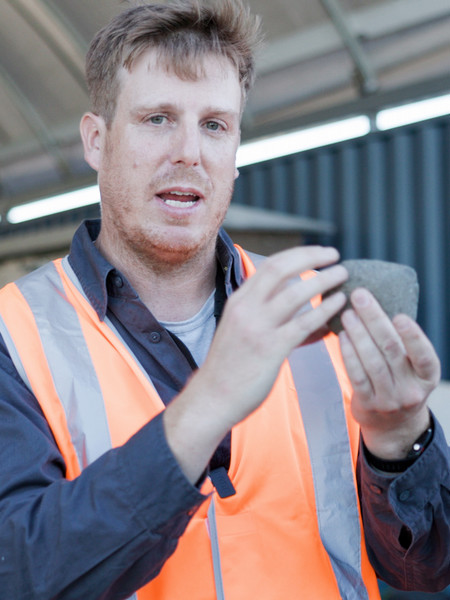
Ben Schoville is an Associate Professor of Anthropology at Purdue University whose research examines the technological innovations that supported human survival during the late Pleistocene.
He is the co-director of the North of Kuruman Project. His work connects field archaeology, lithic analysis, experimental archaeology, and quantitative methods, including AI and machine learning, across Africa and Australian collaboration networks.
Current research areas
- Technological change and survival strategies during the late Pleistocene.
- Field and analytical research in the southern Kalahari Basin.
- Quantitative study of lithic variability, standardization, projectile technology, and fracture mechanics.
- Australian collaborations in experimental archaeology, digital heritage, and comparative Stone Age synthesis.
- Applications of AI and machine learning to anthropological problems.
Publications
-
The Marine Isotope Stage 5 (∼105 ka) lithic assemblage from Ga-Mohana Hill North Rockshelter and insights into social transmission across the Kalahari Basin and its environs
(2025)
-
Ga-Mohana Hill South Rock Shelter: A late Holocene hunter-gatherer rock shelter site in the Southern Kalahari Basin
(2025)
-
Did climate change make Homo sapiens innovative, and if yes, how? Debated perspectives on the African Pleistocene record
(2024)
-
Function, style, and standardization: is the proximal or distal end of a Middle Stone Age point more variable?
(2023)
-
The Tswalu Kalahari Reserve, South Africa
(2023)
-
Integrated evidence-based extent of occurrence for North American bison (Bison bison) since 1500 CE and before
(2023)
-
A lithic provisioning model as a proxy for landscape mobility in the Southern and Middle Kalahari
(2022)
-
Ostrich eggshell beads from Ga-Mohana Hill North Rockshelter, southern Kalahari, and the implications for understanding social networks during Marine Isotope Stage 2
(2022)
-
Holding your shape: controlled tip fracture experiments on cast porcelain points
(2022)
-
Tufas indicate prolonged periods of water availability linked to human occupation in the southern Kalahari
(2022)
-
The drone, the snake, and the crystal: Manifesting potency in 3D digital replicas of living heritage and archaeological places
(2022)
-
Innovative Homo sapiens behaviours 105,000 years ago in a wetter Kalahari
(2021)
-
Exploring variability in lithic armature discard in the archaeological record
(2021)
-
Reply to: clusters of flowstone ages are not supported by statistical evidence
(2021)
-
Fabric analysis and chronology at Ga-Mohana Hill North Rockshelter, southern Kalahari Basin: Evidence for in situ, stratified Middle and Later Stone Age deposits
(2020)
-
A quantitative analysis of wear distributions on Middle Stone Age marine shell beads from Blombos Cave, South Africa
(2020)
-
U-Pb-dated flowstones restrict South African early hominin record to dry climate phases
(2019)
-
Experimental Lithic Tool Displacement Due to Long-term Animal Disturbance
(2019)
-
A Stab in the Dark: testing the efficacy of Watsonia resin for stone-tool hafting
(2018)
-
The Performance of Heat-treated Silcrete Backed Pieces in Actualistic and Controlled Projectile Experiments
(2017)
-
Lithic technological responses to Late Pleistocene glacial cycling at Pinnacle Point Site 5-6, South Africa
(2017)
-
New experiments and a model-driven approach for interpreting Middle Stone Age lithic point function using the edge damage distribution method
(2016)
-
Landscape Variability in Tool-use and Edge Damage Formation in South African Middle Stone Age Lithic Assemblages
(2016)
-
Edge damage on 500-thousand-year-old spear tips from Kathu Pan 1, South Africa: the combined effects of spear use and taphonomic processes
(2016)
-
Kathu Pan 1 points and the assemblage-scale, probabilistic approach: A response to Rots and Plisson, “Projectiles and the abuse of the use-wear method in search for impact”
(2015)
-
An experimental investigation of the functional hypothesis and evolutionary advantage of stone-tipped spears
(2014)
-
A Model of Hunter-Gatherer Skeletal Element Transport: the effect of prey body size, carriers, and distance
(2014)
-
A Middle Stone Age Paleoscape near the Pinnacle Point Caves, Vleesbaai, South Africa
(2014)
-
Testing a taphonomic predictive model of edge damage formation with Middle Stone Age points from Pinnacle Point Cave 13B and Die Kelders Cave 1, South Africa
(2014)
-
Evidence for early hafted hunting technology
(2012)
-
An early and enduring advanced technology originating 71,000 years ago in South Africa
(2012)
-
Frequency and Distribution of Edge Damage on Middle Stone Age Lithic Points, Pinnacle Point 13B, South Africa
(2010)
-
Comparing Lithic Assemblage Edge Damage Distributions: Examples from the Late Pleistocene and Preliminary Experimental Results
(2010)
-
Experimental artifact transport by Harvester ants (Pogonomyrmex sp.): Implications for patterns in the archaeological record
(2009)
Profile links
Purdue faculty profile
Google Scholar profile
University of Queensland profile
UniSQ profile
Blog posts by Ben
Quick links
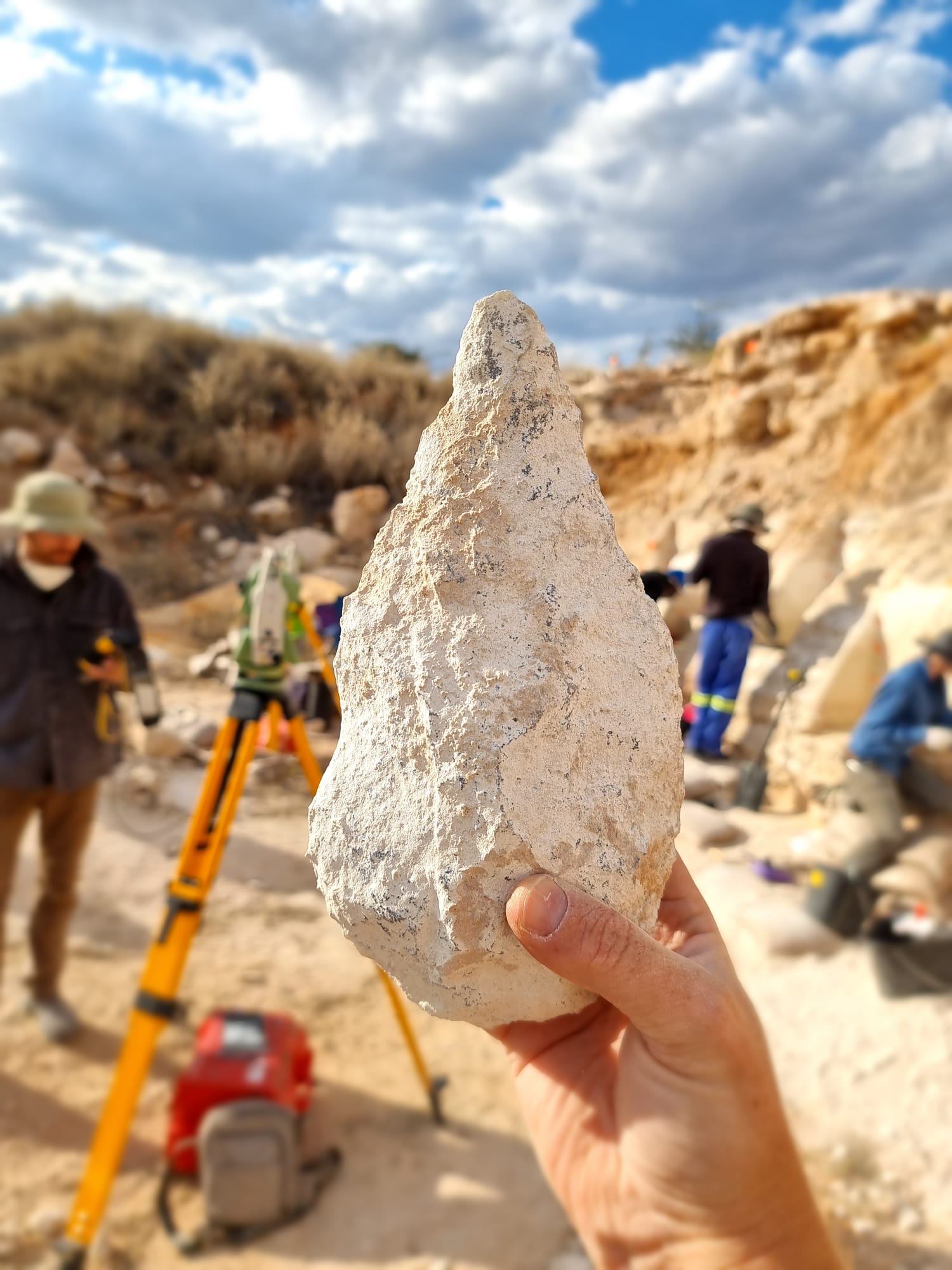
Dr. Schoville's research is focused on late Pleistocene innovation, Kalahari archaeology, experimental methods, and community-engaged heritage.